GEPCO Protected and Unprotected Consumer Explained
Many electricity consumers notice the terms Protected Consumer and Unprotected Consumer on their electricity bills, but are unsure what they mean. These categories play an important role in the electricity tariff system and can affect the amount charged on a monthly bill.
The consumer category is generally determined by electricity consumption patterns and eligibility criteria set by the relevant authorities. Knowing whether you are a protected or unprotected consumer can help you monitor your electricity usage more effectively.
What Is a Protected Consumer in GEPCO?
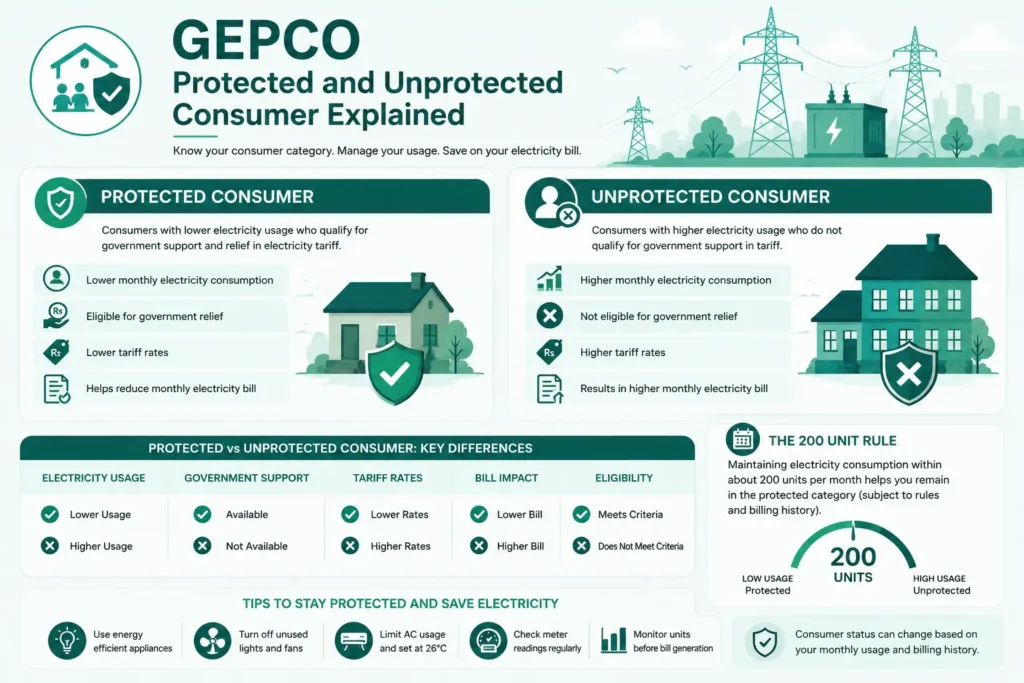
A protected consumer is a residential electricity user who falls within specific consumption limits and meets the eligibility requirements defined under the electricity tariff system.
Protected consumers are generally placed in a category designed to provide relief for households with lower electricity consumption. This category supports consumers who use electricity carefully and maintain lower monthly unit usage.
The protected consumer category mainly applies to domestic electricity connections.
What Is an Unprotected Consumer in GEPCO?
An unprotected consumer is a residential electricity user who does not meet the conditions required for protected consumer status.
Consumers may be classified as unprotected when their electricity usage exceeds the applicable consumption limits or when they no longer qualify under the relevant tariff criteria.
Many households become unprotected due to increased electricity usage during summer months, frequent air conditioner use, or the operation of multiple high-power appliances.
Protected vs Unprotected Consumer: Key Differences
The following table highlights the main differences between the two categories.
Feature | Protected Consumer | Unprotected Consumer |
|---|---|---|
Consumer Category | Protected | Unprotected |
Electricity Usage Pattern | Lower consumption | Higher consumption |
Eligibility Conditions | Must meet specific requirements | Does not meet protected criteria |
Government Relief Benefits | Available in certain cases | Generally not available |
Monthly Bill Impact | Usually lower | Usually higher |
The exact classification depends on electricity consumption history and applicable tariff policies.
What Is the 200 Unit Rule?
The 200-unit rule is one of the most discussed factors related to protected consumer status.
In general, residential consumers who maintain electricity consumption within the applicable limit may remain eligible for protected status. However, consumers who regularly exceed the threshold may move into the unprotected category according to the applicable rules.
Because electricity usage changes throughout the year, consumers should regularly monitor their monthly unit consumption and review their electricity bills carefully.
How Does GEPCO Determine Consumer Status?
Several factors may be considered when determining a consumer’s category.
Monthly Electricity Consumption
The number of electricity units consumed each month is one of the most important factors.
Billing History
Previous billing records may be reviewed to determine eligibility for a particular consumer category.
Residential Consumer Eligibility
Protected consumer status generally applies to eligible domestic consumers who satisfy the required conditions.
Applicable Tariff Policies
Consumer classification is based on tariff regulations issued by the relevant authorities and may change when policies are updated.
How to Check Whether You Are a Protected or Unprotected Consumer
Check Your Electricity Bill
Many electricity bills contain information that indicates the consumer category and tariff details.
Review Your Unit Consumption History
Comparing electricity consumption over previous months can help identify consumption patterns.
Look for Tariff Information
The tariff section of the bill may provide useful information about the consumer classification.
Compare Previous Bills
Reviewing older bills can help determine whether the consumer category has changed over time.
Why Consumer Status Matters
Consumer classification affects several aspects of electricity billing.
Importance of Monitoring Units
Tracking monthly unit consumption helps consumers stay aware of their electricity usage patterns.
Better Energy Management
Consumers who regularly monitor their consumption can make informed decisions about energy use and household budgeting.
Impact on Electricity Charges
Different consumer categories may be subject to different tariff structures.
Common Reasons Consumers Become Unprotected
Several factors can contribute to a change in consumer category.
Higher Monthly Electricity Consumption
Using more electricity than usual may affect eligibility.
Increased Summer Usage
Air conditioners, cooling appliances, and longer operating hours often increase electricity consumption during warmer months.
High-Power Appliances
Electric heaters, air conditioners, water pumps, electric ovens, and similar appliances can significantly increase unit consumption.
Changes in Household Consumption Patterns
Additional family members, new appliances, or business activities conducted at home may increase electricity usage.
Frequently Asked Questions (FAQs)
Final Words
Protected and unprotected consumer categories are important parts of the electricity tariff system. These classifications help determine eligibility under specific tariff rules and are closely connected to electricity consumption patterns. By monitoring monthly unit usage, reviewing billing history, and managing electricity consumption carefully, consumers can stay informed about their category and make better energy-related decisions.