GEPCO Load Shedding Schedule and Feeder Status
Electricity interruptions can affect daily life, businesses, and industrial operations. Many consumers want to know whether a power outage is caused by load shedding, feeder shutdown, maintenance work, or a technical fault.
Understanding the GEPCO load shedding schedule and feeder status can help consumers stay informed about electricity availability in their area. By checking feeder information and shutdown updates, users can better plan their daily activities and avoid unexpected disruptions.
What Is the GEPCO Load Shedding Schedule?
The GEPCO load shedding schedule refers to planned electricity outages implemented to manage electricity demand and maintain the stability of the power system.
Load shedding may occur when electricity demand exceeds available supply. During these periods, electricity distribution is temporarily suspended in selected areas according to a scheduled plan.
Consumers often check the load shedding schedule to know when electricity may be unavailable in their locality.
How to Check the GEPCO Shutdown Schedule
GEPCO provides information about feeder shutdowns and maintenance-related outages through its online systems and customer support channels.
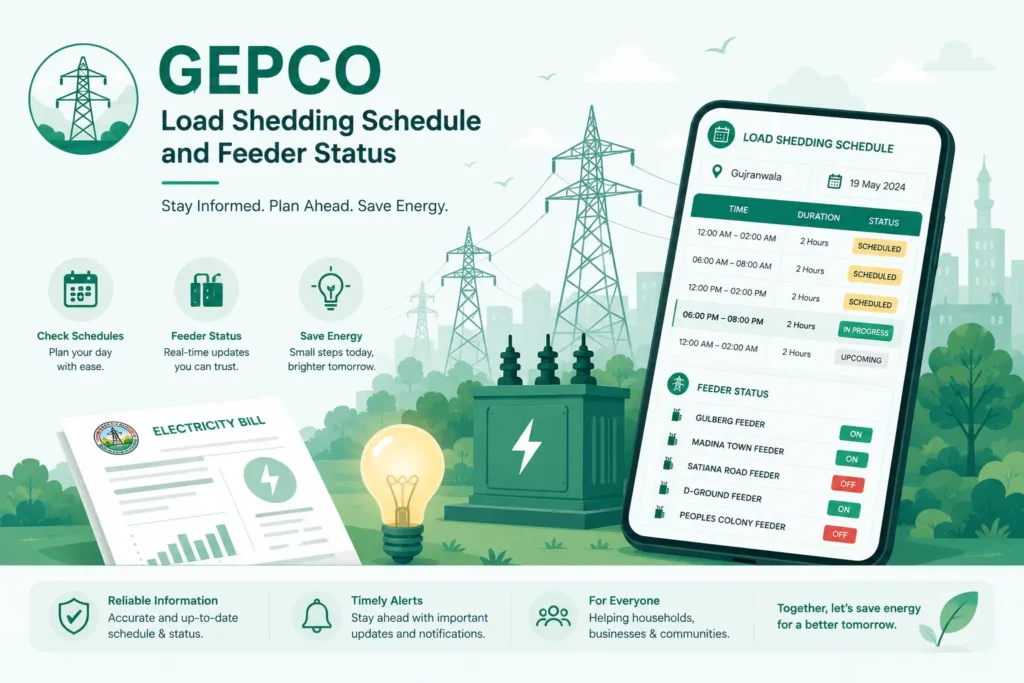
To check the shutdown schedule:
- Visit the official feeder information portal.
- Select the relevant area or feeder.
- Review any scheduled shutdown announcements.
- Check the expected restoration time if available.
Regularly checking shutdown updates can help consumers stay informed about planned maintenance activities.
How to Check GEPCO Feeder Status
A feeder status check allows consumers to determine whether their feeder is active, under maintenance, or experiencing a fault.
Consumers can usually verify feeder status through online feeder portals or customer support services.
Checking the feeder status is useful when electricity is unavailable, and the reason for the outage is unclear.
What Is a Feeder?
A feeder is an electricity distribution line that supplies power from a grid station to a specific area, neighborhood, commercial zone, or industrial sector.
Each feeder serves a group of consumers connected to the electricity distribution network.
When a feeder experiences a fault, maintenance work, or shutdown, all consumers connected to that feeder may be affected.
How to Find Your Feeder Information
Consumers need their feeder details to check the feeder status and shutdown information.
Through Your Electricity Bill
The easiest way to find feeder information is by checking your GEPCO electricity bill. Many bills contain details that can help identify the associated feeder and service area. Consumers should keep their bill available when checking feeder status online.
Through the Online Feeder Portal
Consumers can also locate feeder information through online feeder portals by entering the required electricity connection details. The portal may display feeder names, operational status, and maintenance information.
Why Feeder Status Matters
Knowing the feeder status helps consumers:
- Understand the cause of power interruptions.
- Identify maintenance-related shutdowns.
- Track electricity restoration progress.
- Verify whether a feeder fault exists.
- Stay updated about power supply conditions.
GEPCO Shutdown Schedule vs Load Shedding Schedule
Many consumers confuse feeder shutdowns with load shedding. However, both situations are different.
Load Shedding | Shutdown |
|---|---|
Caused by electricity demand management | Usually caused by maintenance or technical work |
May follow a scheduled plan | Often announced before maintenance work. |
Can affect multiple feeders | May affect specific feeders only |
Related to power supply balancing | Related to equipment repair or upgrades |
Understanding these differences helps consumers identify the actual cause of power interruptions.
Which One Affects Your Area?
The impact depends on your feeder and the electricity distribution area. Checking the feeder status and shutdown information can help determine whether the outage is caused by load shedding, maintenance work, or a technical fault.
Reasons for GEPCO Load Shedding and Shutdowns
Scheduled Maintenance
GEPCO periodically performs maintenance on transmission lines, transformers, feeders, and other electrical equipment. These planned shutdowns help improve system reliability and reduce the risk of unexpected failures.
System Faults
Technical faults can occur due to damaged equipment, feeder trips, transformer issues, weather conditions, or network problems. In such cases, electricity may remain unavailable until repair work is completed.
High Electricity Demand
During periods of increased electricity consumption, the power system may experience additional load pressure. Managing electricity demand helps maintain network stability and protect electrical infrastructure.
Common Issues While Checking Feeder Status
Consumers may occasionally face difficulties when checking feeder information.
Common issues include:
Incorrect feeder details.
Temporary portal outages.
Delayed status updates.
Internet connectivity problems.
System maintenance on the feeder portal.
Frequently Asked Questions (FAQs)
Final Words
Understanding the GEPCO load shedding schedule and feeder status can help consumers stay informed about electricity availability in their area. Whether an outage is caused by load shedding, maintenance work, feeder faults, or high electricity demand, checking feeder information provides valuable insights into the status of the power supply. Regularly monitoring feeder updates can help consumers better plan their activities and respond quickly to electricity interruptions.