GEPCO Peak Time, Peak Hours, and TOU Billing Guide
Understanding GEPCO’s peak time can help consumers manage their electricity usage more efficiently and reduce their monthly electricity bills. During peak hours, electricity demand is higher, resulting in increased energy costs for consumers billed under the Time of Use tariff system.
By knowing the GEPCO peak hours and adjusting the use of high-power appliances, households and businesses can improve energy efficiency and potentially lower their electricity expenses.
What Is GEPCO Peak Time?
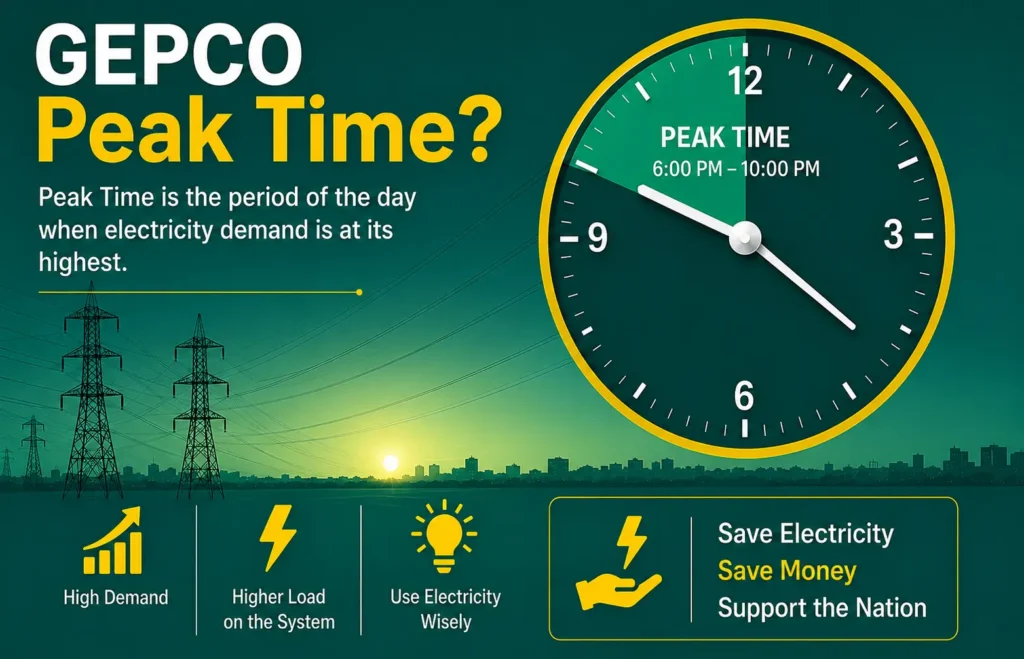
GEPCO peak time refers to the specific hours of the day when electricity demand is at its highest. During these hours, consumers generally use more electrical appliances such as air conditioners, electric heaters, washing machines, water pumps, and industrial equipment.
To manage electricity demand across the power grid, electricity providers apply different rates for peak and off-peak hours under the Time of Use billing system.
Consumers who use more electricity during peak hours may receive higher electricity charges compared to those who shift their usage to off-peak periods.
Current GEPCO Peak Hours Schedule
Time Slot | Type |
|---|---|
6:30 PM – 10:30 PM | Peak Hours |
10:30 PM – 6:30 AM | Off-Peak |
6:30 AM – 6:30 PM | Normal |
What Are GEPCO Peak Hours?
GEPCO peak hours are the designated periods when electricity consumption is highest within the service area of the Gujranwala Electric Power Company.
Peak hours may vary depending on seasonal schedules announced by electricity authorities. Consumers should regularly check the latest billing information and official notifications for updated timings.
Peak hours are commonly important for:
- Residential consumers
- Commercial consumers
- Industrial consumers
- TOU meter users
- High electricity consumption households
How Does Time of Use Billing Work?
Time of Use billing is a pricing system that charges different electricity rates based on the time electricity is consumed.
Under Time of Use billing:
Peak hours have higher electricity rates.
Off-peak hours have lower electricity rates.
Smart electricity meters record energy consumption during different time periods.
Consumers can reduce costs by shifting non-essential activities to off-peak hours.
Why Are Peak Hours Important?
Lower Electricity Bills
Reducing electricity usage during peak hours can help decrease monthly electricity expenses.
Better Energy Management
Consumers can schedule high-energy appliances during off-peak hours for improved efficiency.
Reduced Load on the Power Grid
Balanced electricity usage helps maintain a stable power supply across cities and communities.
Increased Appliance Efficiency
Running heavy appliances during less congested periods may improve overall energy performance.
Appliances That Consume More Electricity During Peak Hours
The following appliances typically increase electricity consumption during peak hours:
- Air conditioners
- Electric heaters
- Water heaters
- Electric irons
- Washing machines
- Clothes dryers
- Water pumps
- Electric ovens
- Industrial machinery
Limiting the use of these appliances during peak periods can help manage electricity costs.
Tips to Reduce Electricity Usage During GEPCO Peak Hours
Consumers can follow these practical tips to save energy:
- Use washing machines during off-peak hours.
- Iron clothes before or after peak time.
- Set air conditioners to energy-saving temperatures.
- Switch off unnecessary lights and appliances.
- Use LED bulbs instead of traditional bulbs.
- Schedule water pumping outside peak periods.
- Unplug devices that are not in use.
Small changes in daily habits can lead to noticeable savings on electricity bills.
Who Should Pay Attention to GEPCO Peak Time?
GEPCO peak hours are especially important for:
- Households with high electricity consumption
- Consumers using TOU meters
- Commercial businesses
- Factories and industrial units
- Offices with heavy electrical equipment
These consumers can often achieve greater savings by managing their electricity usage carefully.
Frequently Asked Questions (FAQs)
Final Words
Understanding GEPCO peak time and GEPCO peak hours is important for effective energy management. Consumers who understand the Time of Use (TOU) billing system can make smarter decisions about when to use electricity. By reducing consumption during peak periods and shifting non-essential activities to off-peak hours, households and businesses can improve energy efficiency and potentially lower their monthly electricity bills.